
Last Updated on May 26, 2026 by Mr.Feng
This is the central experiment log for Experiment #001: Can a Single-Page Affiliate Site Still Convert on Google Ads?
If you’re new here, start on this page it gives you the full picture before the individual deep-dives make sense.
👉 I post live updates from time to time on BlackHatWorld threads.
Experiment #001 Overview
Primary Hypothesis: A single-page affiliate site can generate profitable conversions via Google Search Ads under compliant conditions.
Current Status: Iteration 3 (Planning)
Last Updated: February 11, 2026
Test Count:
| Iteration | Status | Notes / Last Updated |
|---|---|---|
| Iteration 1 | ❌ Account Suspended | Updated 2025.10 |
| Iteration 2 | ✅ Experiment completed, and the objectives have been achieved. | Updated 2026.2 |
| Iteration 3 | 📅 Planning | Updated 2026.2.11 |
Iteration 1 – Initial Test (Account Suspended)(2025.10)
Background
Even heading into 2025, I’m still seeing people talk about the “old school” method of running single-page affiliate sites through Google Ads. It’s wild because, to be honest, this exact strategy is what got me into the game five years ago.
Back then, the first time I touched Google Ads for an affiliate play, it felt like cheating. I’d just grab a domain, throw up a simple one-page lander with a CTA button hitting the offer link, and start driving traffic. The quality was top-notch, and I hit positive ROI almost immediately. Since then, I’ve tried everything under the sun: SEO, social, Pop, Push, Native, but none of them could ever really replicate that same level of stable, laser-targeted, high-converting cold traffic that Google delivers.
If this still works, it would be the ultimate fast track for any beginner to finally make money in this space.
The goal of this experiment is simple: I want to see if a single-page affiliate site, driven purely by Google Ads, can still pull in consistent conversions today. Most importantly, I want to see if the profit can actually outrun the ad spend.
Let’s get into it.
Experiment Preparation
Before I kicked off this experiment, I had to nail down three main things.
First up, the Google Ads account. I’m using my own personal account for this, no agency accounts or proxies involved. I really wanted to keep this as close to a “beginner experience” as possible. It’s a standard individual account, not an MCC. As for the campaign itself, I’m sticking strictly to Google Search, no Display, and I’m targeting the U.S. only.
Then there’s the offer. Since I’m targeting the U.S. with Search ads, I know the CPC is going to be expensive. There’s no way around it. To make sure I can actually cover those high ad costs, I’m going with E-com offers from ClickDealer. Specifically, I’m cherry-picking offers with a high payout to give myself some breathing room for the margins.
Lastly, for the domain and hosting, I’m using the Stellar Plus plan on Namecheap. I’ve used them forever because the price is right and they let you host unlimited sites, which is perfect for someone like me who’s always running different tests. But if I’m being totally honest, the biggest reason I’m using them is just that I’m used to the platform.
So I’m using Namecheap’s Stellar Plus hosting plan, and I’ve developed a 7-step process to quickly build landing pages for testing affiliate offers with Google Ads. I go into all the details in my article, “How I Test Affiliate eCommerce Offers with Google Ads from Scratch (7 Step SOP).”
Experiment Progress
How I chose the offer for the experiment?
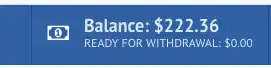
Like I mentioned before, I picked an offer from ClickDealer. Since I’ve run their offers in the past, I still have a balance of over $200 in my account.
I’m also in the ClickDealer internal group where AMs share the latest top offer lists every week. I pulled from the most recent list they posted.
🗂️ Offer List Source
I organized this offer list into a Google Sheet for easier reference.
👉 [Click here to view the sheet]
I ran these offers through a scoring system I developed and eventually landed on one specific offer to promote.
I designed this scoring system to evaluate which promotional campaigns are worth running. I explain the construction process and how to use it in detail in this article: “Affiliate Offer Scoring Tool.”
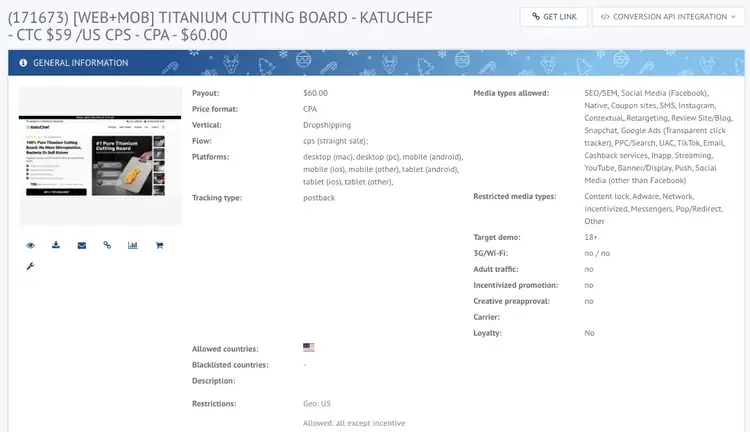
The offer I picked was the Titanium Cutting Board. It scored 11 points in my system, which was the highest score, so that’s the one I went with for the experiment.
How I selected search keywords?
First, I head over to the Titanium Cutting Board website at https://trykatuchef.com/pp/en/
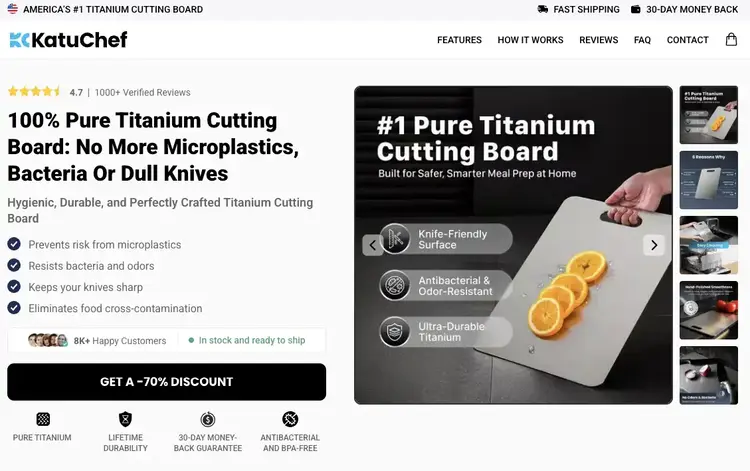
I spent some time diving deep into the product page to make sure I really understood how it works and what makes it stand out. For this specific kitchen offer, the “Titanium” aspect is clearly the biggest selling point. Since that’s the core hook, I decided to set “Titanium Cutting Board” as my primary seed keyword.
Next, I headed over to Google Keyword Planner and used the “Discover new keywords” tool (the “Start with a website” option) to scrape more ideas directly from the landing page.
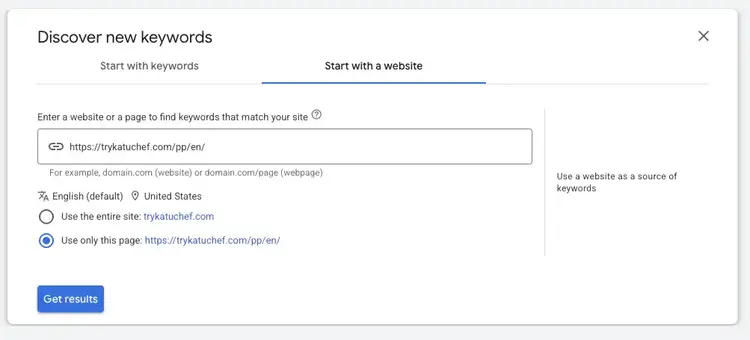
After filtering through the results, I narrowed my list down to these specific keywords:
- [Titanium Cutting Board]
- [best cutting boards for health]
- [titanium cutting board review]
- [best titanium cutting board]
I’m going to start running these using Exact Match. My plan is to let it run for a full week to gather enough data, then I’ll look at the actual search terms to see which ones are driving the most volume. Once I have those insights, I’ll handle the rest of the optimizations.
How I built my landing page?
Since this is just a preliminary test and I can’t be sure yet if this offer has a market or will actually convert, I didn’t want to sink too much time into the landing page. I’ve made this mistake too many times before, spending ages building what I thought was a perfect page only to run it for a month without a single conversion. My goal now is to use existing resources as much as possible. If the offer starts converting, then I will put in the time to create a more polished version.
I found the offer in ClickDealer and grabbed their built in LP link.
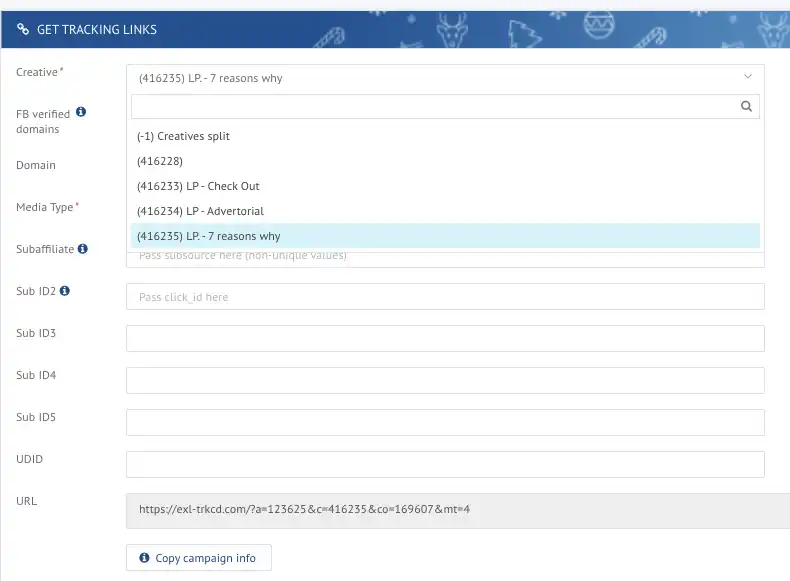
Since ClickDealer links use redirects, you can’t use them directly in Google Ads because they will never pass the review process. My solution was to save the original page locally and manually edit the code to fix any errors or incorrect information.
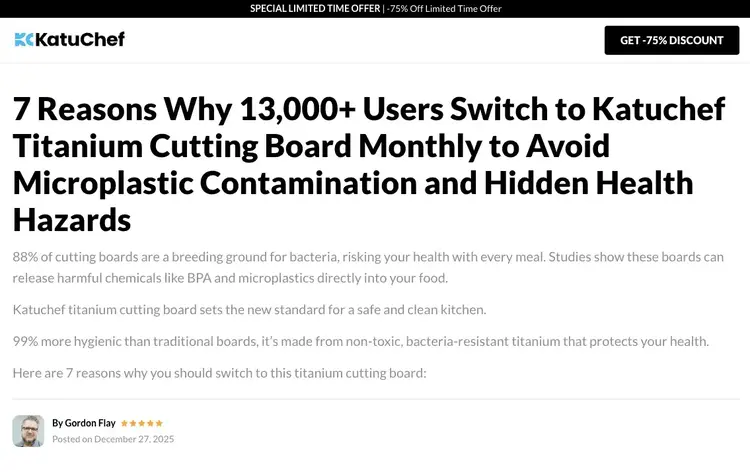
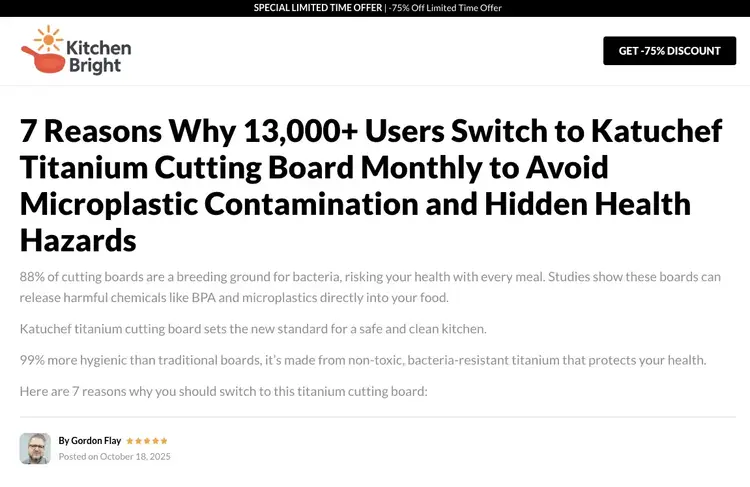
Finally, I uploaded it to my Namecheap Stellar Plus hosting and registered a domain for it. The final URL is https://www.kitchenbright.store/ (.store domains are cheap, and since this is just a test, I’m trying to keep costs as low as possible).
How I set up the ad campaign?
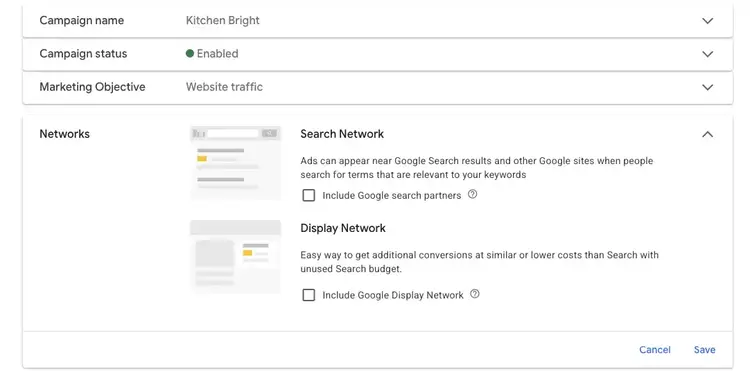
I set the campaign to target the US.
I opted out of both Google Search Partners and the Display Network.
The daily budget is $18. I’m not setting a total budget for now; I just want to run it and see what the data looks like before making any further decisions.
For bidding, I chose a Maximum CPC bid limit of $1.50. I calculated this by taking the average of the “top of page bid” low and high ranges from last month in Google Keyword Planner for the keyword “Titanium Cutting Board.”
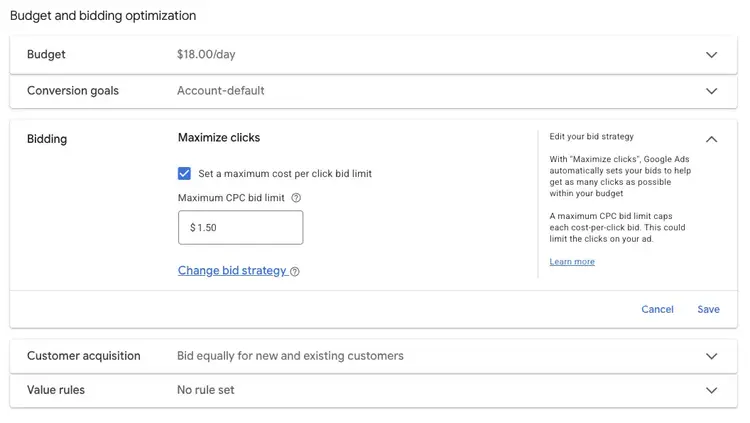
I didn’t set any specific targeting for ad schedules or devices.
That wraps up my initial campaign setup. I’ll let it run for a week to collect some data before I start optimizing.
Experiment Results
Initial ad results
Fortunately, the ad passed the review on the first attempt and went live.
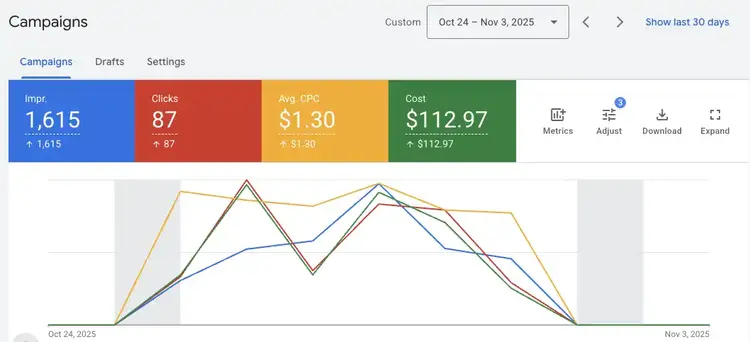
However, after less than a week (Oct 26, 2025 to Oct 31, 2025), my ads were cut off. My account got suspended, and the reason given was “Your account violated the Unacceptable Business Practices policy.”

It feels like it was over before it even really started.
Here is the ad data from that week.
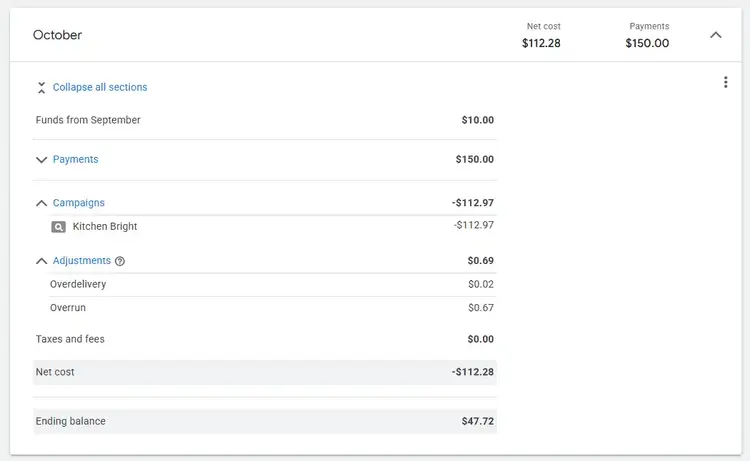
I spent a total of $112.97 and got 87 clicks, with an average CPC of $1.30.
Key Findings
After the first round of testing, the results were not ideal. I spent $112.97 and summarized the following two points
(Note, these are just my personal observations and conclusions from running the ads)
1.Ads that have already been approved and launched can still get disapproved or shut down.
However, I found the minimum requirements that a landing page needs to meet in order to most likely pass ad approval and run. You can check out my other article, which explains how I got my affiliate marketing landing page approved on Google Ads in 2026.
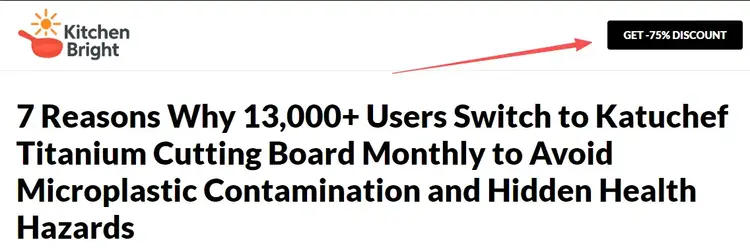
2.The account was suspended for the reason: “Your account violated the Unacceptable Business Practices policy.” From my research, it is very likely due to the phrase “GET -75% DISCOUNT” on the landing page. From what I found online, a key point is that exaggerated discounts, false promotions, or misleading offers are common triggers for account suspension.
3.When running Google keyword ads, I used to rely heavily on the CPC metric. This time, though, I realized it’s not very reliable. I tested keywords where Google Keyword Planner showed a CPC of $1. Even when I set my bid at $1, or increased it by 50% to $1.50, the ads still didn’t get any impressions.
However, when I used the Top of Page Bid low and high ranges from Keyword Planner as my bidding reference, the chances of getting impressions after launching a new campaign were much higher than when I relied on CPC alone.
Iteration 2 – Google Ads Account Survival Test (Success) (2026.1.24-2026.2.6)
Background
After the first experiment failed and my Google Ads account was suspended, I realized that if you want to run single-page affiliate offers on Google Ads today, compliance is the first and most critical problem to solve.
I decided not to buy agency or reseller Google Ads accounts for two reasons. First, I have no way to verify how reliable those accounts really are. Second, my goal with this experiment is to test things from a true beginner’s perspective, using a low budget and only my own resources. For that reason, I continued using my own Gmail account to create a new Google Ads account. This also allowed me to test an important question: after an account suspension, can a newly created Google Ads account under the same Gmail still operate safely?
The goal of Iteration 2 is straightforward. I’m running ads for the same offer using a newly created Google Ads account, and the primary objective is for the account to remain active and unsuspended for 14 consecutive days.
What Changed in This Iteration
| Comparison Dimension | Iteration 1 | Iteration 2 |
|---|---|---|
| Google Ads Account | Self-created personal account | New personal account created under the same Gmail (same billing information) |
| Offer | Titanium Cutting Board | Same offer (kept unchanged to eliminate variables) |
| Landing Page | Cloned official sales-focused LP with aggressive promotional copy (e.g. large discounts) | Information-based, compliance-focused LP with weak sales intent, prioritizing Google policy requirements |
| Domain | Newly registered test domain (.store), directly hosting sales-oriented content | New domain using a .com |
| IP environment | Standard environment IP (no special isolation) | Same |
| CTA Style | Strong conversion-oriented CTA (e.g. Buy / Get Discount) | Soft CTA (e.g. View Details / Learn More) to avoid sensitive triggers |
I minimized the number of variables to find the reasons affecting compliance.
Live Experiment Log on BlackHatWorld
Live Tracking: I am documenting every single update of this experiment on BlackHatWorld.
You can follow the raw data and community discussion here: [Thread Link: [Journey] Testing a Single-Page Affiliate Site on Google Search Ads]
Experiment Results
After 14 days of real testing, the ad campaign is still running normally. However, I’ve decided to pause it. I’ll explain the reason in the Key Findings section later.
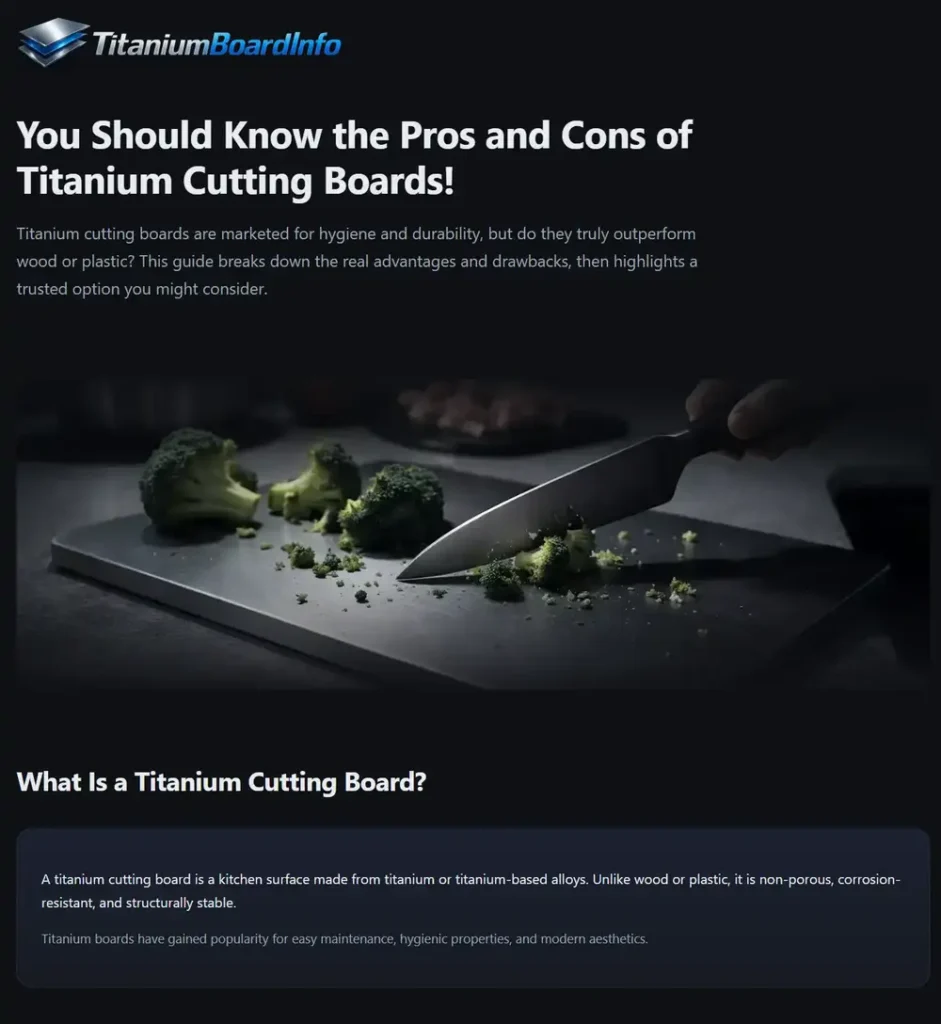
I can now share the landing page from Iteration 2, since it turned out to be a successful case study. At least for the purpose of Iteration 2, the goal was achieved.
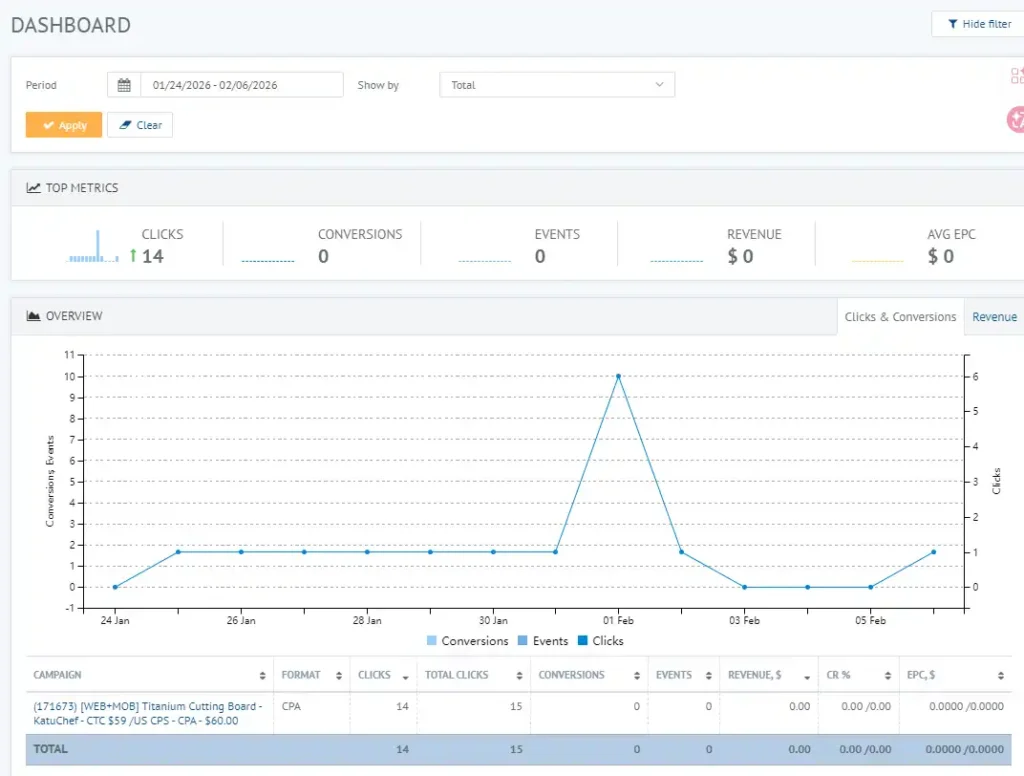
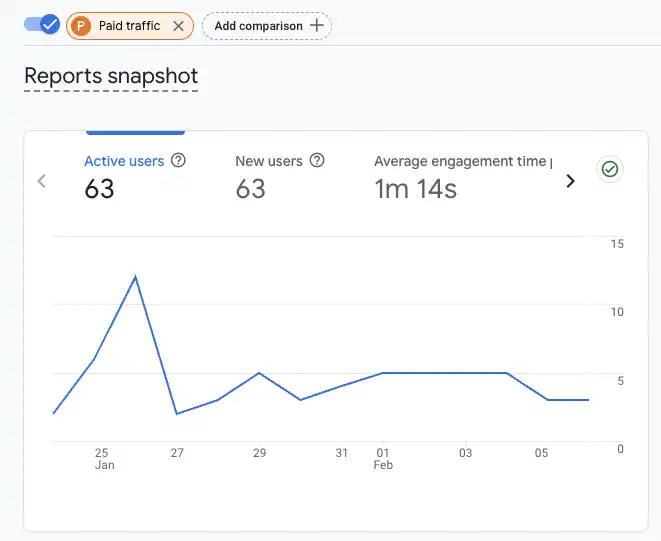
Iteration 2 Experiment Data Summary
| Metric | Data | Notes |
|---|---|---|
| Account Survival Days | 14 days (2026.1.24 – 2026.2.6) | Account remained active during test |
| Landing Page URL | www.titaniumboardinfo.com | |
| Policy Violations | 0 | No warnings or restrictions |
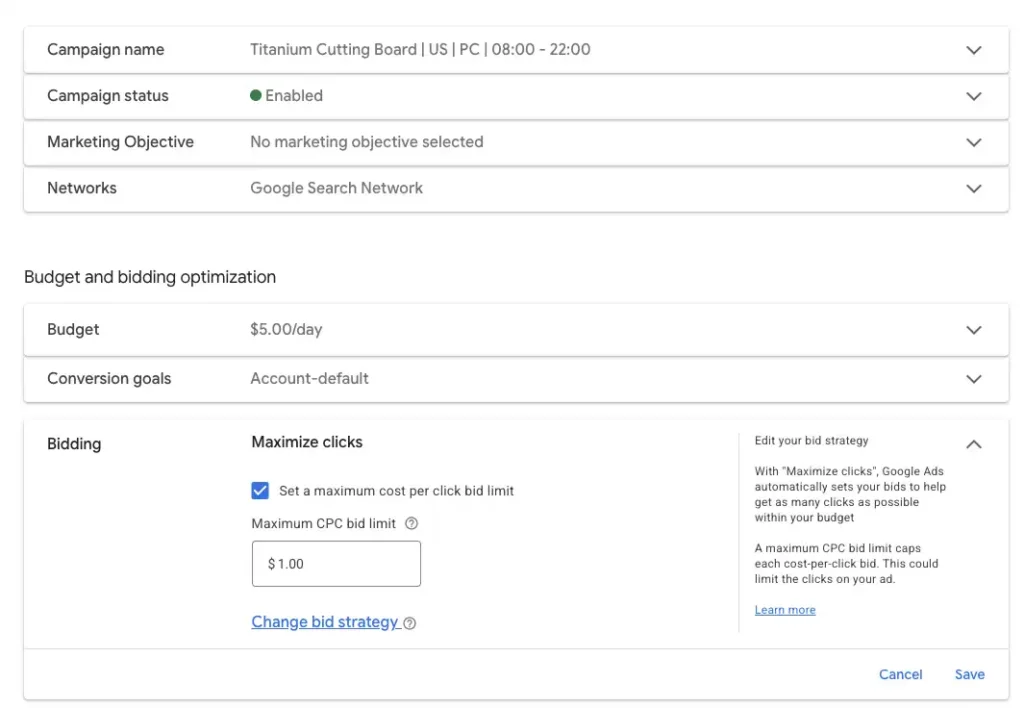
| Campaign Type | Search | Only targeting search ads |
| Bidding Strategy | $1.00 | Manual CPC / Maximize Clicks |
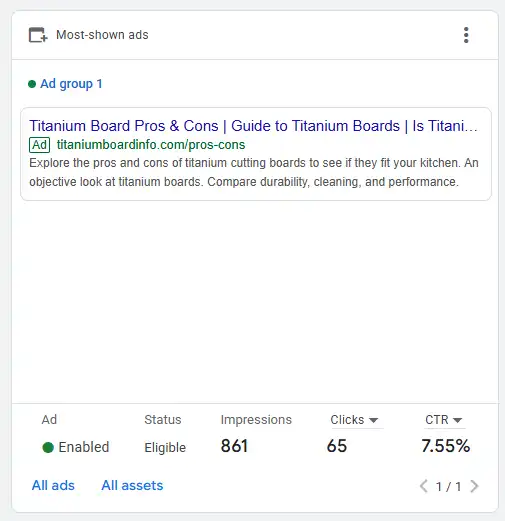
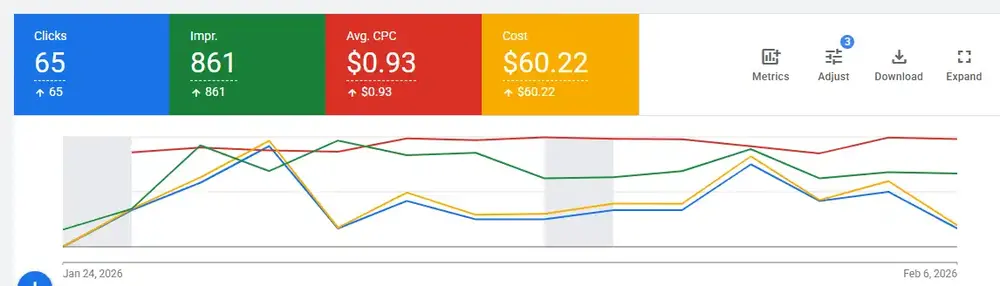
| Impressions | 861 | |
| Clicks | 65 | |
| CTR | 7.55% | |
| Avg CPC | $0.93 | |
| Cost | $60.22 | Total spend |
| Average engagement time | 1m 14s | Only paid traffic was counted |
| LP CTR | 13.9% | 14 clicks in total, 5 of which were my own, so the actual clicks were 9 |
| Conversion Rate | 0 | no conversion |
Key Findings
1.The biggest takeaway from this experiment is that it confirmed my assumptions about the compliance requirements for landing pages and ad campaign setups before I started testing. I have already summarized 10 Google Ads compliance rules for landing pages in another article. By following this method, I’ve cleared the compliance hurdle, which is an important step for future tests of affiliate offers through Google Ads when looking for profitable campaigns.
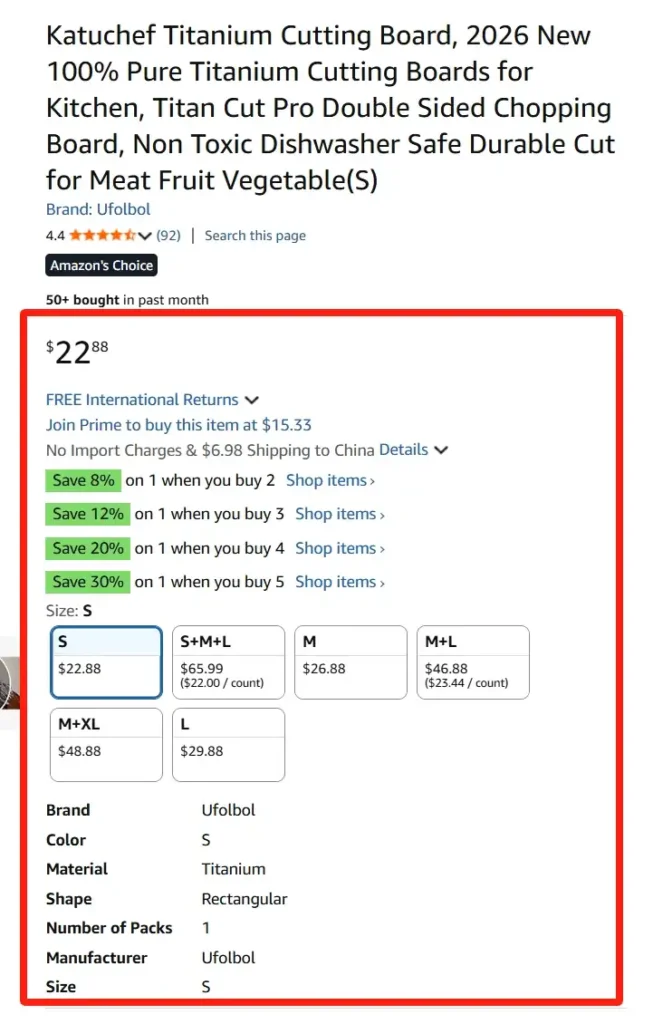
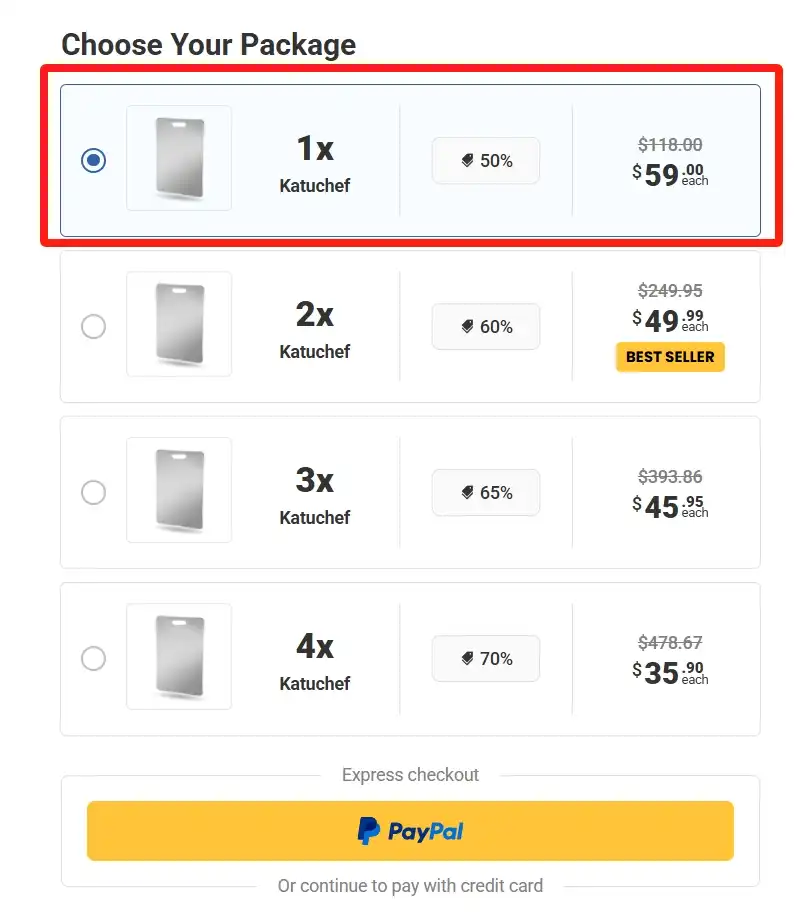
2. I realized that the offer I’m currently testing is probably hard to convert. My budget is limited, and I can’t spend it on an offer that won’t give quick feedback. I might have to spend a lot of money just to get one conversion. The most critical issue is that for the same product, I can find cheaper options on Amazon, so it has almost no price competitiveness. If I were a buyer, I would go straight to Amazon instead of buying from this independent site. I also noticed that most of the e-commerce offers on ClickDealer can be found on Amazon under the same brand or similar products at much lower prices. This is why I decided to pause this ad and not continue testing it.
Iteration 3 — Recurring SaaS Affiliate Test (In Progress)
Background
Iteration 2 achieved its goal of compliance testing, proving that a brand new Google Ads account, with the right landing page and ad setup, could run consistently for 14 days without getting banned. But Iteration 2 had zero conversions, and the reason wasn’t compliance. It was the product itself. The physical ecommerce product had cheaper alternatives on Amazon and simply had no price competitiveness.
That made me realize that once the compliance problem is solved, the real challenge is finding the right offer type for Google Ads cold traffic.
After several months of research I landed on one conclusion: recurring SaaS affiliate programs are the best offer type for Google Ads cold traffic. Three reasons: free trials lower the conversion barrier, commissions are ongoing rather than one time, and unlike physical products, SaaS has no Amazon competition problem.
Iteration 3 Goal
Iteration 3 comes down to one core question:
Can you send cold Google Ads traffic directly to a SaaS affiliate landing page, with no funnel, no email sequence, no retargeting, and actually convert at a profit?
This gets validated in two phases.
Phase 1 is working through the math on paper. Before spending a single dollar, I use a mathematical model to determine whether this strategy is theoretically viable and what conditions need to be met to break even.
Phase 2 is real world testing. Based on the conclusions from the math, I find programs and keywords that meet the criteria, run ads with a real budget, and collect real data.
Iteration 3 Preparation
Before jumping into real testing I did a lot of groundwork.
First, after researching which affiliate offer type works best for Google Ads cold traffic, I settled on recurring SaaS affiliate programs. As a beginner with no established website traffic or social media following, where do I even go to apply and build out a recurring SaaS affiliate program list?
I collected programs through three methods. The first was applying through traditional affiliate networks, but most networks are not beginner friendly. After signing up I only got approved by PartnerStack and CJ.
The second was searching through SaaS launch platforms like Product Hunt. My thinking was that early stage SaaS brands probably have less strict affiliate approval requirements.
The third method, and the most effective one I’ve found so far, is reverse searching using footprints from affiliate software platforms. This is now my primary collection method.
Current Status
Iteration 3 is still in the preparation phase. I’m continuing to build out the affiliate program list while also working through the math on paper. Can this approach actually break even? And what criteria do I need to set for filtering offers?