Last Updated on June 13, 2026 by Mr.Feng
After continuously building out my list of recurring SaaS affiliate programs that don’t require traffic proof to join, I assumed the next step was to jump straight into keyword research and start running ads.
I was wrong. I had skipped over the most basic question: do these programs actually allow me to promote them through Google Ads?
With the method I was using to find these programs, most of the signup pages don’t even have affiliate terms anywhere, let alone anything mentioning paid advertising. Which meant I had no choice but to email them one by one to ask.
This article documents what I found after reaching out to the recurring SaaS affiliate programs I got approved for: which ones allow Google Ads and which ones explicitly say no. I’ll also be putting together a running list of programs that support Google Ads and keeping it updated over time.
I Got Approved. That Didn’t Mean I Could Run Ads.
After getting approved for a batch of recurring SaaS affiliate programs and starting to research keywords and plan out landing pages, I almost skipped right over the most basic question. I mean, I was already approved, I had my links, it felt like I could just get going.
Then during my research I came across this line on the Typeless affiliate page:
“You may not use your affiliate link in any paid advertising or paid media. This includes search engine ads, Facebook ads, TikTok ads, or anything similar that would compete with Typeless’s marketing and cause confusion for potential customers.”
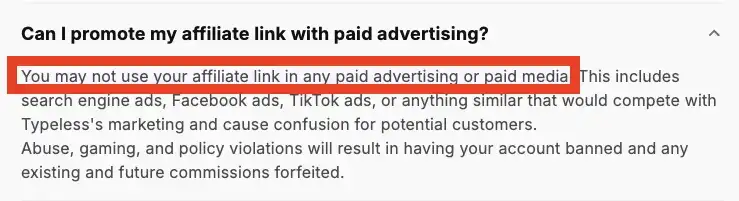
That’s when it hit me. Getting approved only means you’re allowed to promote the product. It doesn’t mean you can promote it any way you want. I now need to confirm whether each program I’ve been approved for actually allows paid advertising, and specifically Google Ads. If I violate the affiliate terms, every dollar I spent on ads is gone, any commissions I earned get clawed back, and my affiliate account gets permanently banned.
So from this point forward, the very first thing I need to do before anything else is confirm whether the programs I’ve been approved for allow paid advertising, and especially Google Ads.
How SaaS Affiliate Programs Communicate Their Google Ads Policy
While going through each program one by one, I found that different platforms and different types of programs communicate their paid advertising policies in completely different ways. It basically breaks down into a few situations.
Case 1: The Policy Is Clearly Stated
This is the ideal situation. A small number of programs in my list explicitly state on their affiliate page that paid advertising is prohibited. The Typeless affiliate program I mentioned earlier is a good example, it spells it out clearly in the FAQ section of their affiliate page. Some put it in their terms of service. Larger and more well known brands in particular tend to address this directly on their affiliate page.
Case 2: Something Is Mentioned, But It’s Vague
Some programs mention promotional methods somewhere on their page, but the wording is unclear. For example one only says “You are not entitled to use the word CloudTalk in Google AdWords or other similar tool without our previous written consent.”

It only restricts brand keyword bidding in Google AdWords, it doesn’t explicitly ban running Google Ads altogether. In theory you could run non-brand keyword campaigns, but I usually still send an email to confirm.
Case 3: No Policy at All (The Most Common Case)
This is by far the most common situation I’ve run into, probably because I tend to look for early stage or lower competition programs, which means mostly small SaaS products, especially the ones on platforms like Rewardful. You can get approved with almost no traffic proof and promotion access is granted automatically. But most of these small SaaS companies haven’t put any thought into their affiliate terms. Nothing is stated and there’s no affiliate terms page at all.
In these cases I always send an email to confirm and never assume it’s allowed. Based on my actual experience, the emails I’ve sent have pretty much produced two outcomes:
Outcome 1: A clear rejection in the reply. This is by far the most common result.
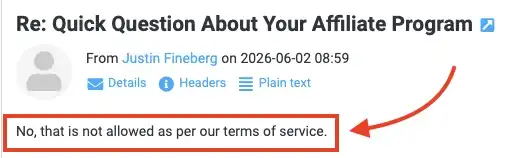
Outcome 2: A vague reply that requires follow up questions. My sense is that these brands are mainly trying to gauge whether you have quality traffic, and for someone using paid ads the chances of getting approved are pretty low. This is just my initial observation and I’ll keep updating as I learn more.
What I Noticed: Larger SaaS Programs Are More Transparent
One pattern that stood out through this research is that small SaaS programs tend to have opaque terms or no affiliate terms whatsoever. Larger SaaS companies on the other hand have detailed affiliate terms that clearly spell out whether Google Ads are allowed and explicitly prohibit bidding on their brand keywords.
What I Found Across Different Affiliate Platforms
Here’s what I found across different platforms.
Rewardful-Based Programs
Rewardful programs are the ones I’ve researched the most and make up the largest portion of my blog list. The barrier to entry is extremely low, almost no traffic proof required, but the attitude toward paid advertising is very conservative. A small number of programs do include specific language on their affiliate signup page stating that Google Ads and other paid channels are not supported, but most have no mention of it at all and no link to any policy. For the ones I’ve emailed, pretty much every clear reply has been a rejection.
The reason is pretty straightforward. These are early stage small SaaS products with a small user base. They’re worried about affiliates running paid ads and competing with them for the same traffic, so they tend to ban it.
Tolt-Based Programs
Tolt is similar to Rewardful. Low signup barrier, no traffic proof needed, easy to get approved. Most programs don’t have any clear policy on Google Ads support, and some don’t even have a dedicated affiliate page at all. Usually there’s just an affiliate link in the top or bottom navigation of the SaaS website, and clicking it takes you straight to the default Tolt signup page. There’s almost no text or standalone page explaining anything about promotional methods in detail.
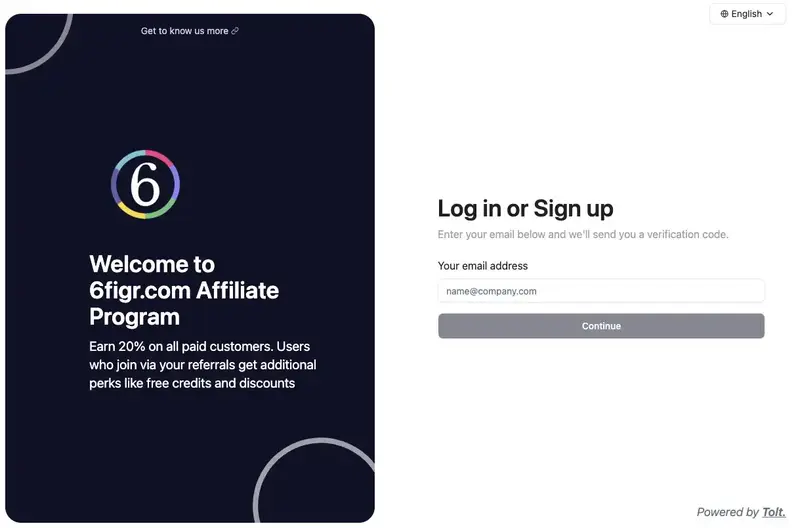
Same situation as Rewardful, I have to email each one to ask. I’ll update with findings as replies come in.
PartnerStack
Based on the programs I’ve been approved for on PartnerStack, once I’m inside a program’s dashboard I can find the Terms of Service under Program Settings in the left sidebar.
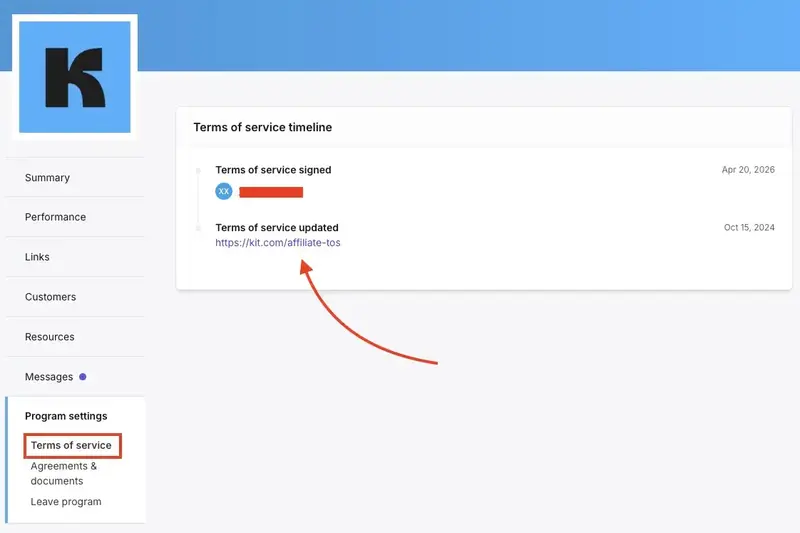
These terms generally spell out clearly whether paid advertising is allowed, whether brand keyword bidding is permitted, and other specific details.
PartnerStack programs tend to come from more established SaaS companies with professional affiliate management teams. The terms are usually more thorough and the attitude toward paid advertising is more open. Most do allow paid ads but with specific restrictions. For example some prohibit linking directly from a PPC ad to the official website and require you to link to your own landing page first. Non-brand keywords only is also a common requirement.
There are other platforms I haven’t gotten to yet. I’ll test them one by one and keep updating.
Recurring SaaS Affiliate Programs That Allow Google Ads
Based on everything I’ve confirmed so far, here are the programs that actually allow Google Ads promotion. I’ll keep adding to this list as I verify more.
| Program | Google Ads Allowed | Platform | Last Verified |
|---|---|---|---|
| Repper.app | ✅ Yes | Rewardful | June 2026 |
| Kit | ✅ Yes | Partnerstack | June 2026 |
| Campaign Monitor | ✅ Yes | Partnerstack | June 2026 |
| CloudTalk | ✅ Yes | Partnerstack | June 2026 |
| Webflow | ✅ Yes | Partnerstack | June 2026 |
If you want to be notified when I add new programs to this list, subscribe below.
What This Means for Experiment #001
This research changed how I think about sourcing programs for Google Ads testing.
Rewardful and Tolt programs are easy to get into, but most don’t allow paid advertising. That’s a dead end for what I’m trying to do. PartnerStack programs have higher approval standards, but the terms are clearer and the attitude toward paid ads is more open.
Going forward, I’ll be expanding my search beyond beginner-friendly Rewardful programs and focusing more on established programs where Google Ads is explicitly allowed.
The next step is finding a program that clears all 3 filters at the same time, a CPC low enough to make the math work, terms that allow Google Ads, and a commission structure that could realistically break even. When I find one, I’ll start running ads and document everything.